GENERAL, LAPAROSCOPIC, LASER SURGEON (HERNIA REPAIRS, BREAST DISORDERS, APPENDECTOMY, GALL BLADDER STONES, VARICOSE VEINS, PILES, FISSURES, FISTULA, DIABETIC FOOT ULCERS, HYDROCELE, LIPOMA, ABSCESSES AND SEBACEOUS CYST SURGERIES)

Endocrine Surgeries



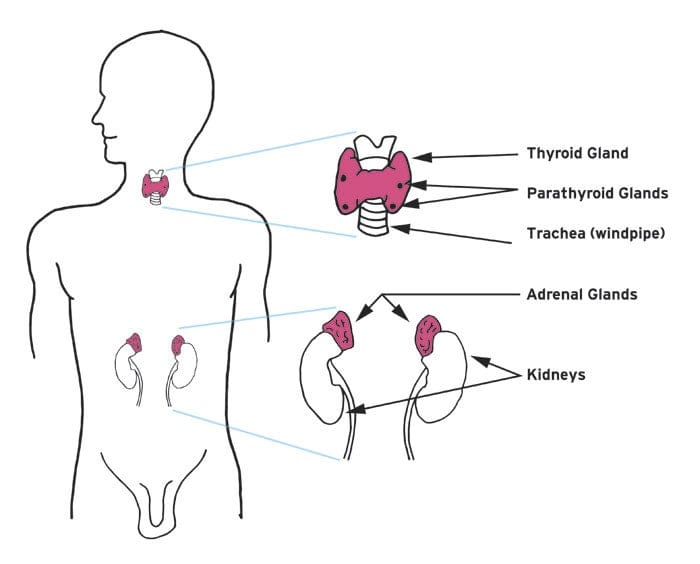
Endocrine surgeries treat disorders of hormone-producing glands primarily thyroid, parathyroid, and adrenal glands to remove tumors (benign or malignant), nodules, or overactive tissue.
These procedures often utilize minimally invasive laparoscopic or robotic techniques to reduce recovery time.
Common Procedures
Include Thyroidectomy, Parathyroidectomy, and Adrenalectomy.
Thyroid
The thyroid is a butterfly-shaped gland in the neck that produces hormones regulating metabolism, growth, and energy usage.
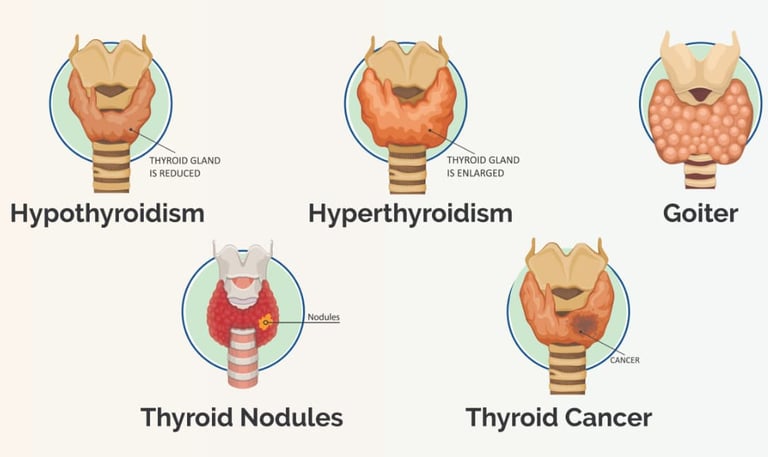
Thyroid diseases, including Hashimoto’s (underactive) and Graves’ disease (overactive), Thyroid nodules and Thyroid cancer.
Surgery includes Hemithyroidectomy, Total Thyroidectomy with or without neck dissection.
If untreated leads to complications like hoarseness of voice, breathlessness, dysphagia due to compression of RLN, trachea and esophagus.
Parathyroid
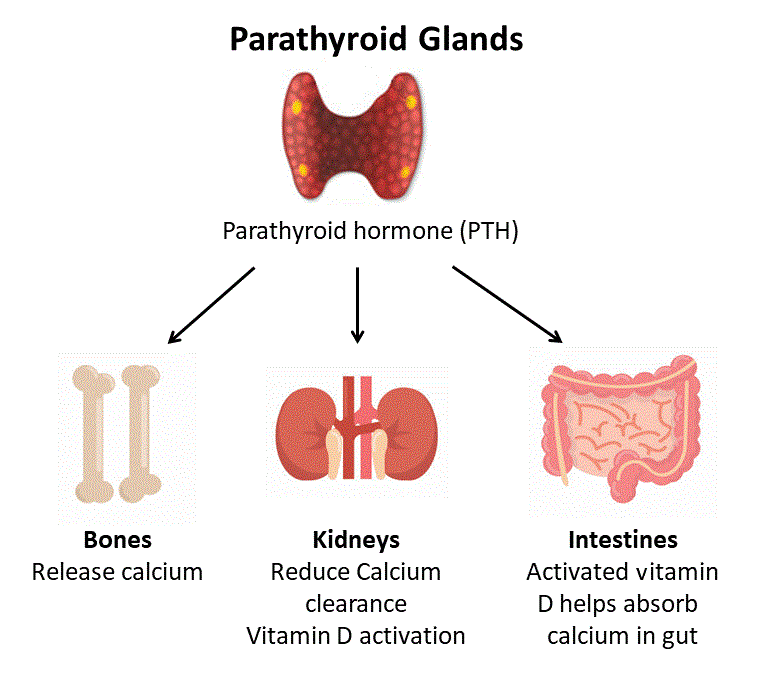
Parathyroid glands are four tiny, pea-sized glands in the neck (behind the thyroid) that regulate blood calcium levels by releasing parathyroid hormone (PTH). PTH keeps calcium levels in a tight range, essential for bone health, nerve function, and muscle contraction.
Disorders include hyperparathyroidism (excess PTH) or hypoparathyroidism (insufficient PTH), causing symptoms like bone pain, kidney stones, fatigue, or muscle spasm.
Treated with surgery(Parathyroidectomy) or medication.
Untreated, progressive hyperparathyroidism (overactive glands) can lead to severe long-term health consequences, including osteoporosis, kidney failure, cardiovascular disease, and reduced life expectancy.
Adrenal Gland
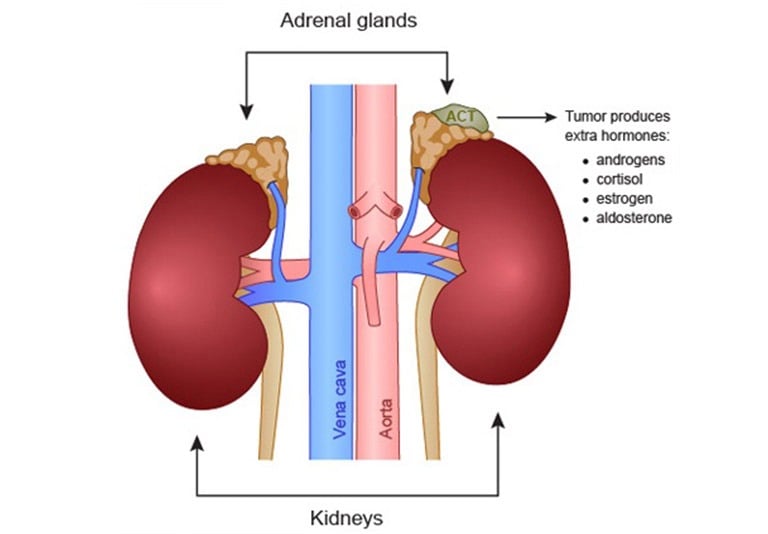
Adrenal glands are small, triangular-shaped endocrine glands located on top of each kidney that produce essential hormones regulating metabolism, immune system, blood pressure, and stress responses. They consist of two main parts: the outer cortex (producing cortisol, aldosterone, and androgens) and the inner medulla (producing adrenaline/noradrenaline).
Adrenal gland surgery, or adrenalectomy, is the surgical removal of one or both adrenal glands, usually to treat hormone-producing tumors (e.g., Cushing’s syndrome, pheochromocytoma) or suspected cancer. Most procedures are performed laparoscopically—a minimally invasive technique using tiny incisions and cameras for faster recovery and reduced pain.
Untreated adrenal gland tumors can lead to severe, life-threatening conditions due to excess hormone production, including extreme high blood pressure, heart issues, diabetes, and severe metabolic dysfunction.